

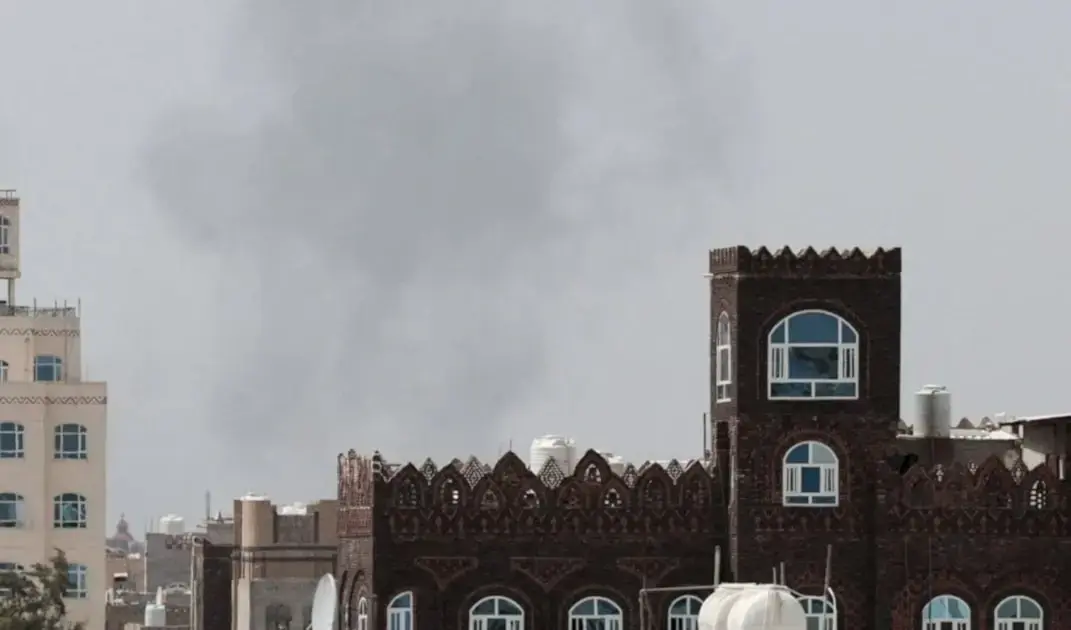
Yemen's Ansar Allah movement quickly retaliated after Saudi airstrikes targeted Sanaa International Airport and forced it to suspend operations. The group launched attacks on Saudi airports, including Abha International Airport in the south, and declared the end of the de-escalation period with Riyadh that had been in place since April 2022.
Ansar Allah military spokesman Brig. Gen. Yahya Saree said Saudi Arabia carried out "a blatant attack" on Sanaa airport with several airstrikes aimed at shutting it down to humanitarian flights carrying patients and stranded passengers. He said Yemeni forces engaged the attacking aircraft before launching a retaliatory strike on Abha airport with ballistic missiles and drones.
Saree warned airlines against using Saudi airspace until the blockade on Sanaa airport is lifted, saying, "The Yemeni armed forces are determined to confront the aggression and end the unjust siege imposed on our country."
The developments revived Ansar Allah's previously declared "airport for airport" deterrence formula.
Sources in Sanaa told Al-Akhbar that the response would escalate and that attacks on Abha airport would continue until it is rendered inoperable. They said further operations could involve new missile systems. Media outlets affiliated with the Sanaa government also released footage of previous attacks on Saudi oil facilities, warning that the next response would be "more devastating and intense."
Videos circulated by Saudi activists appeared to show Saudi air defenses intercepting Yemeni missiles over Jeddah. The reports raised concerns that the escalation could spread to major Saudi airports, particularly those in Jeddah and Riyadh. The developments revived Ansar Allah's previously declared "airport for airport" deterrence formula.
Saudi-led coalition spokesman Turki Al-Maliki acknowledged the attacks, saying Saudi air defenses had responded to a "ballistic missile threat" launched from Yemen.
The escalation followed Saudi airstrikes on Sanaa airport earlier on Monday. Six strikes damaged both runways and halted operations. Sanaa said the attack aimed to prevent an Iranian Mahan Air aircraft carrying a Yemeni delegation attending the funeral of the Martyr Iranian Supreme Leader Ayatollah Ali Khamenei from landing at the airport. The move was viewed by Sanaa as an attempt to maintain the Saudi-US blockade on Yemen.
The aircraft later diverted to Hodeidah airport, which has been out of service for 11 years, and landed safely. Observers described the landing as a significant challenge to the blockade and a demonstration of Sanaa's ability to break the siege with force.
Riyadh did not issue an official statement after the strike. However, Aden government Defense Minister Taher Al-Aqili issued one on its behalf. He warned that the Iranian aircraft would not be allowed to enter Yemeni airspace and threatened action if it crossed into southern airspace. Presidential Leadership Council head Rashad Al-Alimi also ordered armed factions in southern and eastern provinces to prevent the plane's passage, describing it as a violation of Yemeni “sovereignty”.
As tensions between Sanaa and Riyadh escalated, Yemeni political sources told Al-Akhbar that UN Yemen envoy Hans Grundberg and Oman were working to contain the crisis.
Ansar Allah forces remained on high alert, particularly over the possibility of an attack on the Iranian aircraft. Saree took to X to call the airport strikes "a crime that will not go unanswered," saying they had ended the de-escalation period and that Saudi Arabia would "bear the consequences."
Sanaa's Foreign Ministry thanked Tehran for helping break the air blockade and blamed Saudi Arabia for the consequences. It said the attack would mark "the beginning of a new phase to reclaim Yemen's full rights."
Ansar Allah's chief negotiator, Mohammed Abdulsalam, described the strikes as a "blatant violation" of Yemen's sovereignty and a major breach of the 2022 truce. He accused Riyadh of obstructing efforts to reopen Sanaa airport and delaying the implementation of a proposed peace roadmap. He warned that "the attack on Sanaa airport will not go unanswered, and the aggressor bears responsibility for the consequences."
As tensions between Sanaa and Riyadh escalated, Yemeni political sources told Al-Akhbar that UN Yemen envoy Hans Grundberg and Oman were working to contain the crisis. Their efforts reportedly focus on restoring commercial flights from Sanaa airport and preventing further escalation until a planned prisoner exchange is implemented.
The deal, reached under UN auspices in mid-May, includes the release of more than 1,650 detainees from all sides and was expected to take place this week. However, the strikes on Sanaa airport could disrupt preparations, including the presence of two UN aircraft for the International Committee of the Red Cross operation.
This is an edited translation for an article published in Arabic.
Leave a comment
Your email address will not be published. Required fields are marked *